Workplace Protection (Personal Violence) Bill
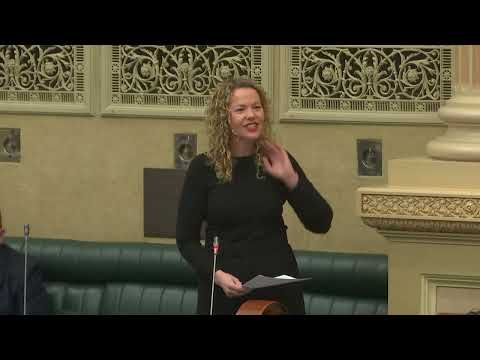
Ms CLANCY (Elder) (12:12): I rise today in support of the Workplace Protection (Personal Violence) Bill which seeks to make public-facing workplaces safer for thousands of South Australians: violence, abuse, intimidation and harassment are not just part of the job for frontline workers. Everyone deserves to feel safe at work. On the rare occasion that someone is threatened, abused or assaulted at work, the law should be firmly on their side and empower employers with the tools to act quickly and protect their staff, which is exactly what this bill provides.
Not just in our own state but right across the country, we have seen escalating and deeply concerning behaviour directed at people just trying to do their job, particularly since the pandemic. South Australians have been appalled and disgusted by the reports of retail workers, healthcare workers and customer service employees, who are often younger workers, being subjected to shocking incidents of rage, intimidation and violence. These incidents can create ongoing trauma, making workplaces a place where people no longer feel safe. Passage of this bill will put an end to this by creating a simple, direct mechanism to prevent an offender from returning to a workplace and causing further harm.
This bill allows for an employer, premises owner, employee association representative, health and safety representative or a union representative to apply to the Magistrates Court or Youth Court for a workplace protection order. To make the order, the court must be satisfied of two things: first, that the defendant has engaged in personal violence at a workplace and, second, that they may engage in personal violence again, if the order is not made.
Personal violence is defined by the bill to include physical and sexual violence, threatening behaviour, stalking, harassment, intimidation, offensive conduct or property damage that reasonably causes fear. Importantly, this bill also recognises such behaviour in any workplace where the work requires direct interaction with members of the public, irrespective of whether the interaction is in person or not, and includes any place where a worker goes or is likely to be while undertaking their work. Whether you are serving customers in a shop, caring for someone in their home, staffing a call centre, delivering a service on the road or interacting online, this reform can protect you.
If the court is satisfied that a workplace protection order is necessary, it can impose a range of conditions, including barring the defendant from entering the workplace, requiring them to keep a certain distance, prohibiting them from approaching or contacting specific workers or preventing them from encouraging others to engage in violence. A workplace protection order must also include a condition requiring the surrender of any firearms in the defendant's possession and the surrender of any firearm licence or permit.
Should a defendant breach any condition of their workplace protection order, they face a maximum penalty of two years' imprisonment if the breach does not involve personal violence or five years' imprisonment if it does. This bill also establishes a clear framework for interim workplace protection orders so they can be made quickly before the full hearing of an application when it is necessary to ensure a worker's safety or prevent substantial damage to property in a workplace. These interim orders can remain in effect until a final order is made, declined or its application revoked.
The reform before us today is based closely on laws successfully operating in the Australian Capital Territory, which have been effective in giving employers the tools they need to protect their staff. However, this bill is stronger, giving more representatives the ability to apply for a workplace protection order to reinforce the fact that workplace safety is a shared responsibility.
The bill before us today does not exist in isolation. It forms part of an extensive suite of reforms the Malinauskas Labor government has led to promote community safety and ensure that every South Australian is safe at work. We have already increased penalties for assaulting retail workers and empowered police through Operation Measure to crack down on retail theft. We have introduced nation-leading knife crime reforms and authorised declared public precincts, which give police greater powers to prevent violence.
In closing, I would again like to thank our Attorney-General, his team and all of the key stakeholders who helped shape this bill through consultation in late 2024. I understand the SDA, the Master Builders Association, the AHA, the National Retail Association, SA Independent Retailers, the Business Chamber and the Shopping Centre Council all provided practical insights and advice on this bill to ensure it strikes the right balance between protecting workers and maintaining a fair, workable legal framework.
I would particularly like to acknowledge Josh Peak, President of the SDA, for his advocacy and support for his union's members. It was great to see a number of members celebrated on Saturday night through the Lyn Rivers awards, named after an incredible woman, who I was very lucky to have living in my electorate and who is very missed. The recipient of the Delegate of the Year award was my constituent Kirsty Lithgow, and I want to take this opportunity to congratulate her again.
I am really proud to stand here again today speaking in support of another piece of reform that directly speaks to the values of the Malinauskas Labor government and the larger trade union movement. It speaks directly to our values, to the dignity that work can provide and to the belief that everyone, from the high school student stacking shelves at the Cumberland Park Woolies, the bus drivers leaving the Morphettville depot and the baristas at the far too many brilliant coffee shops in my community—every single worker—deserves respect and protection. I commend the bill to the house.